The Under-Eye Truth: What Actually Works for Hollowness, Dark Circles, Puffiness, and Bags

Of everywhere on the face, the under-eye area gets the most questions — and the most frustration. It’s thin, delicate skin sitting directly over muscle, fat, and bone with almost no cushioning of its own, which means it shows fatigue, stress, genetics, and age faster and more honestly than almost anywhere else. It’s also the area where patients have tried the most things themselves before ever sitting down in a consultation chair. So let’s talk through what’s actually happening under there, what doesn’t work as well as it’s marketed to, and what does. Why eye creams only get you so far Topical eye creams are usually the first thing anyone reaches for, and they’re not useless — a good formula with caffeine, peptides, or vitamin C can modestly improve puffiness and skin texture. But they work on the surface layer of skin. They cannot rebuild lost volume, thicken skin that has genuinely thinned, or change the vascular and structural issues sitting underneath. In my experience, most patients see something in the range of a 10% improvement from topicals alone — real, but nowhere close to solving the underlying problem. If a cream promises to “erase” hollows or bags, that’s a promise skincare alone can’t keep.The lifestyle factors that matter more than people expectBefore any procedure, it’s worth being honest about how much sleep, stress, and diet actually move the needle here: Sleep affects fluid distribution and blood flow to the area. Poor or inconsistent sleep tends to show up first as puffiness and a duller, more shadowed look under the eyes.Stress raises cortisol, which affects fluid retention and skin quality over time, and it also tends to show up as visible tension and shadowing in this area specifically.Diet — particularly sodium intake, hydration, and alcohol — has a direct, fairly fast effect on under-eye puffiness because this tissue is so responsive to fluid shifts. None of this is about chasing perfection in your habits. It’s that these factors are genuinely modifiable, and addressing them often produces a visible difference before you spend a single dollar on treatment. Genetics: the factor you can’t change Here’s the part that’s harder to hear but important to say plainly: genetics play a major role in under-eye appearance, and genetics are not modifiable. Thin, translucent under-eye skin, a naturally deep tear trough, visible blood vessels causing a bluish or purplish tint, or an inherited tendency toward under-eye fat prolapse (true “bags”) are structural, inherited traits. No cream, serum, or lifestyle change will fully override them. This is also exactly why two people with identical sleep and skincare habits can have very different under-eye appearances — and why treatment planning has to be individualized rather than formulaic. Why we usually avoid HA filler under the eyes Hyaluronic acid filler is the default answer a lot of people expect for hollowing under the eyes, and it can work well in carefully selected patients with the right anatomy. But in most patients, I steer away from it in this specific area, for a simple biological reason: HA is hygroscopic, meaning it attracts and holds onto water. In an area as thin and fluid-sensitive as the under-eye, that water attraction tends to create or worsen puffiness rather than smooth it out. This becomes especially noticeable at exactly the moments patients care most about looking good — when you’re tired, coming down with something, dealing with seasonal allergies, or even just emotional. All of those states involve fluid shifts and mild inflammation, and HA filler under the eyes tends to swell right along with them. The result is a face that looks fine on a “good day” and puffy or waterlogged on an ordinary one. That inconsistency is one of the most common sources of regret I see with under-eye filler. PRP/PRF EZGEL under-eye treatment: a natural alternative This is where platelet-rich plasma (PRP) or platelet-rich fibrin (PRF) has become one of my favorite tools for this area specifically. PRP/PRF EZGEL/BIOGEL treatment is created from a small sample of your own blood, spun in a centrifuge to concentrate the platelets and growth factors, then injected into the under-eye area. Because it’s autologous — entirely your own biological material — there’s no foreign substance sitting in the tissue and no risk of the water-attraction puffiness that comes with HA. Here’s how the process actually unfolds, and it’s worth understanding both phases: Phase one — the immediate filling effect. When PRP/PRF is injected, the plasma and fibrin components create some immediate volume and hydration, so you’ll typically see a filled, refreshed appearance right away. This early effect is temporary — it’s the fibrin scaffold, not the final result. Phase two — the collagen-building effect. As that fibrin scaffold gradually breaks down over the following weeks, it doesn’t just disappear — it triggers your skin’s own fibroblasts to ramp up collagen and elastin production in the treated area. This is the real mechanism behind PRP’s results: it’s not filling space, it’s rebuilding the skin’s own structural support from within. That’s why results continue to improve for weeks after treatment, rather than looking their best on day one and fading from there. The combined effect — an early cosmetic improvement that transitions into genuine tissue quality improvement — is what makes PRP/PRF BIOGEL such a good fit for the under-eye specifically. Results generally last around six to nine months, and because you’re working with the body’s own regenerative response rather than adding a foreign material, the risk of the puffy, waterlogged look that comes with HA in this area is essentially eliminated. A special case: true under-eye bags This is a distinction I make carefully in consultations, because it changes what’s actually achievable. “Hollowing” and “bags” are not the same problem, and they don’t respond to the same treatments. Hollowing is a loss of volume — something aesthetic medicine is genuinely good at addressing, because we can add volume back. True under-eye bags, on the other hand, are usually caused by the fat
Refreshed, Not Reinvented: Rethinking What “Anti-Aging” Should Actually Mean
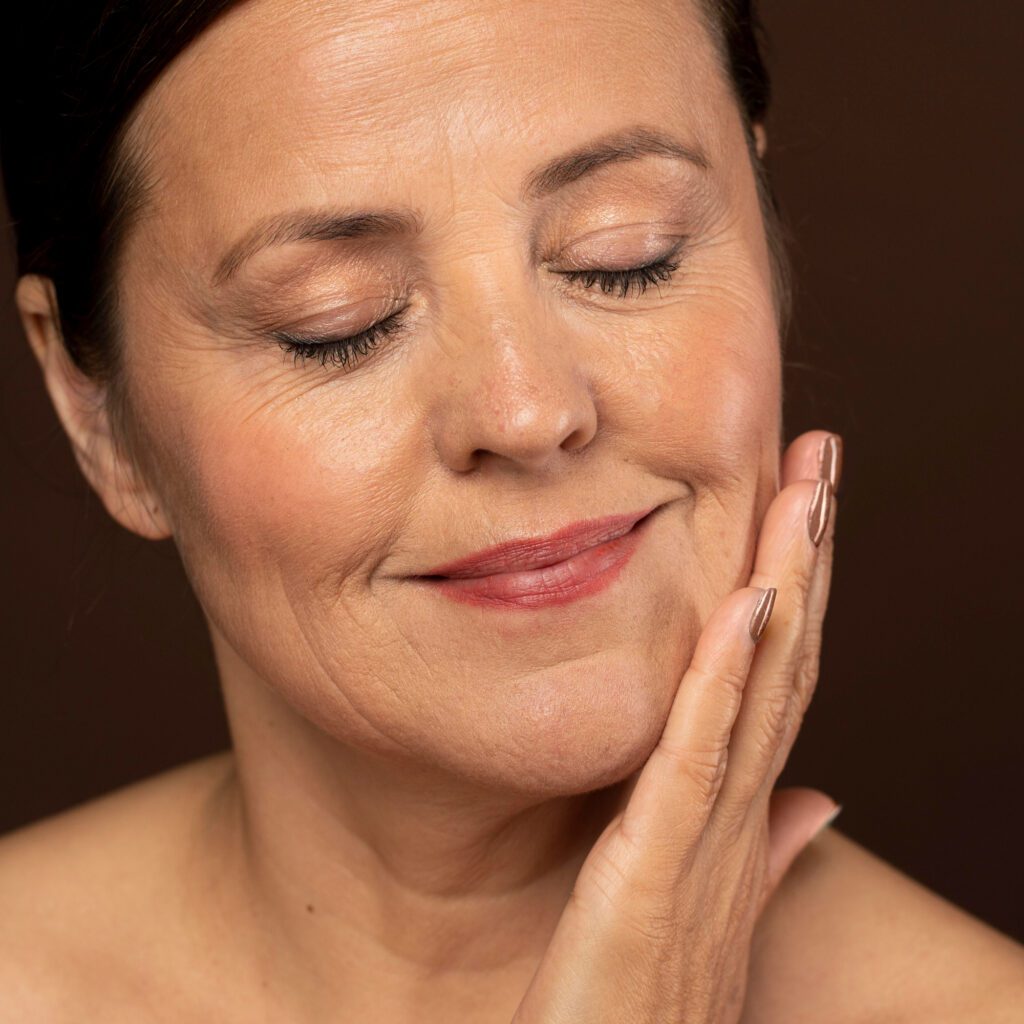
There’s a moment almost every patient has in a consultation, whether they say it out loud or not: “I don’t want to look like I’ve had anything done. I just want to look like myself again — just less tired.” That sentence is the whole philosophy of good aesthetic medicine, and it’s worth unpacking, because the fear of looking “overdone” is now just as common as the original wrinkle that brought someone in the door. The concerns we actually hear Nobody walks in asking to look 25. What people describe is much more specific, and much more human: A face that looks tired even after a full night’s sleep — hollowing under the eyes, flattened cheeks, a general loss of the “bounce” skin used to have. Lines that are starting to stay etched in even at rest, not just when they smile or frown. A lower face that’s begun to soften and droop along the jawline, with marionette lines forming at the corners of the mouth. Lips that have thinned and lost definition compared to photos from ten or fifteen years ago. Skin that looks duller, more textured, or more uneven in tone than it used to. Almost all of these come down to the same underlying process: loss of volume and structural support (fat pad and bone changes), a slowdown in collagen and elastin production, and cumulative sun and lifestyle exposure on the skin’s surface. Aging isn’t really about wrinkles appearing out of nowhere — it’s about the scaffolding underneath the skin quietly changing shape over decades. Matching the treatment to the actual problem This is where a thoughtful plan differs from a single quick fix. Different concerns call for different tools, and layering them appropriately is what produces a result that reads as “rested,” not “different”: Neuromodulators (Botox, Dysport) soften the dynamic lines caused by repeated muscle movement — the forehead lines, the “elevens” between the brows, crow’s feet. Used conservatively, they relax those lines without freezing natural expression. Hyaluronic acid (HA) fillers address more targeted volume needs — lips, under-eye hollows, cheeks, jawline contouring. Because HA fillers show their result right away and can be dissolved if needed, they’re often used for precise, smaller-volume corrections where control matters most. Radiesse is a calcium hydroxylapatite filler that provides both immediate volume and a longer-term collagen-stimulating effect. It’s particularly useful for areas needing more structural support and lift — the jawline, cheeks, and hands — and tends to hold up well over time as that dual mechanism plays out. Sculptra takes a different approach entirely: rather than adding volume directly, it’s a biostimulator that works by triggering your own body to gradually rebuild collagen over a series of sessions. That’s what makes it so effective for broad, diffuse volume loss across the midface — and why the results appear slowly, in stages, rather than all at once. It’s usually the centerpiece of a longer-term restoration plan rather than a single-visit fix. Microneedling works on the skin’s surface rather than underlying volume — fine controlled needle punctures stimulate the skin’s own repair and collagen response, improving texture, tone, scarring, and overall skin quality. It pairs well alongside injectables as the piece that refines how the skin itself looks, not just its underlying structure. Routine skincare is the daily, unglamorous foundation everything else sits on top of. A consistent regimen — daily broad-spectrum sunscreen, a retinoid, antioxidants, and appropriate hydration — protects the results of in-office treatments and slows the rate of new damage. No injectable or device can fully compensate for unprotected sun exposure, so this is often the highest-leverage, lowest-cost part of any plan. Lip and perioral treatment, usually with HA filler, is about restoring proportion and definition that’s been lost, not about maximizing size. The goal is lips that look like a younger version of that same person’s lips, not a different person’s lips altogether. Why “looking 25 again” reads as fake Chasing maximal youth rather than a natural, rested version of one’s current self is usually what produces the results people find unsettling. An extremely full midface on a 55-year-old face doesn’t read as “youthful” — it reads as unfamiliar, because it doesn’t match the bone structure, skin quality, and proportions that face has actually had for decades. Overfilled lips, an overly smoothed forehead with zero movement, and cheeks pushed well past their natural volume are all recognizable precisely because they’ve stopped matching the rest of the face and the person’s age. The goal I work toward with patients is closer to “you, on a good day, well-rested, five years ago” than “you, at 25.” Those are very different targets, and the second one is what tends to age badly and require increasingly aggressive correction over time. Why a real plan takes months, not one appointment This is probably the least glamorous part of the conversation, and also the most important: you cannot undo several decades of gradual change in a single visit. A treatment plan that actually holds up is usually staged over a few months, for a few reasons. Products like Sculptra work with your body’s own collagen response, which unfolds gradually — results build over weeks and months, not days. Even with fillers that show results immediately, it’s worth letting swelling fully resolve and the product settle before deciding whether more is needed in a particular area. Layering treatments — starting with structure, then refining with smaller adjustments — produces a far more balanced, proportionate result than trying to correct everything in one sitting. And frankly, it gives both patient and provider the chance to see how the face responds and adjust course, rather than committing to a large volume of product before knowing how it will settle. Patients who go in expecting a single dramatic appointment are often the ones who end up overcorrected, because the temptation is to “finish the job” in one visit rather than let the process unfold the way it’s designed to. Maintenance is the part people forget
Botox or Dermal Fillers? A Physician’s Guide to Choosing the Right Treatment
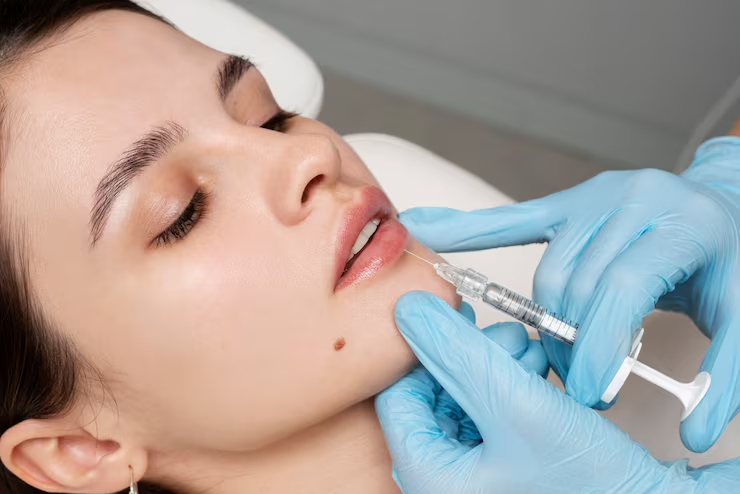
Botox and dermal fillers are the two most requested treatments in medical aesthetics — and also the two most commonly confused. Patients often ask us which one is “better.” The honest answer is that they aren’t competing treatments at all. They solve different problems, and understanding that difference is the first step toward results that look effortless rather than done. At SculptMe Aesthetics, every consultation starts the same way: we look at what’s actually happening in your skin and muscles before recommending anything. Some concerns call for Botox. Others call for filler. Many benefit from a thoughtful combination of both. Here’s how to think about the decision. Understanding Botox Botox is a neuromodulator — it works by temporarily relaxing the small facial muscles responsible for repetitive expression lines. When those muscles contract less, the overlying skin stops creasing, and existing lines soften over time. Botox is most effective for Forehead lines Frown lines between the eyebrows (glabellar lines) Crow’s feet around the eyes Bunny lines across the nose Chin dimpling and jawline slimming (masseter treatment) Most patients notice initial softening within three to seven days, with full results visible by about two weeks. Results typically last three to four months before muscle activity gradually returns, which is why Botox is generally maintained on a quarterly schedule. Understanding Dermal Fillers Dermal fillers work through volume, not muscle relaxation. Most contain hyaluronic acid, a substance your skin already produces naturally, which attracts and holds moisture to restore fullness where volume has been lost. Fillers are most effective for Restoring volume in the cheeks and mid-face Enhancing lip shape and definition Softening nasolabial folds and marionette lines Defining and balancing the jawline Improving hollowness under the eyes Because filler adds structure rather than relaxing muscle, results are visible immediately. Longevity varies by product and treatment area, but most fillers last approximately six months to two years before the body gradually metabolizes them. Botox vs. Fillers: Side by Side Botox Dermal Fillers Relaxes the muscles that cause expression lines Restores volume that has been lost Best for dynamic wrinkles (lines from movement) Best for static wrinkles and facial contouring Results appear gradually over one to two weeks Results are visible immediately Generally lasts three to four months Generally lasts six months to two years Helps prevent lines from deepening over time Enhances fullness and facial proportion Which Treatment Is Right for You? Consider Botox If You Notice lines on your forehead or around your eyes See wrinkles appear mainly when you smile, frown, or raise your brows Want to get ahead of expression lines before they deepen Prefer a treatment with essentially no downtime Consider Filler If You Have noticed volume loss in the cheeks, temples, or under-eyes Want fuller, more defined lips See lines and folds that remain even at rest Want to refine facial proportion without surgery Can Botox and Fillers Be Combined? Yes — and for many patients, this combination produces the most natural-looking outcome. Botox addresses the movement that creates lines, while filler restores the volume and structure that time gradually takes away. Used together, they work on different layers of the aging process rather than duplicating the same effect, which is part of why the results tend to look like rest rather than intervention. A note on approach: Our philosophy at SculptMe Aesthetics is restoration, not transformation. The goal of any treatment plan is for you to look like a well-rested version of yourself — never like you’ve had “work done.” Why Arizona Skin Ages Differently Living in Arizona has real advantages, but our climate accelerates certain signs of aging. Intense, near-constant UV exposure and low humidity break down collagen and elastin in the skin at a faster rate than in more temperate climates, contributing to earlier fine lines, pigmentation, and volume loss. We generally recommend patients pair any injectable treatment plan with: Daily broad-spectrum SPF 30 or higher, reapplied every two to three hours outdoors Consistent hydration A skincare regimen suited to your skin type and concerns Routine professional treatments to maintain results over time What to Expect at SculptMe Aesthetics Every visit begins with a one-on-one consultation with Dr. Davé. As a DO, she brings a whole-person, anatomy-first approach to every treatment plan — evaluating your facial structure, your goals, and the underlying cause of what you’re seeing before recommending Botox, filler, or a combination of both. You’ll never be handed off to someone you didn’t expect to see; from consultation through follow-up, you’re in Dr. Davé’s care. Ready to Find Your Right Treatment? Schedule a personalized consultation with Dr. Davé to determine whether Botox, dermal fillers, or a combination approach best fits your goals. BOOK A CONSULTATION
Natural Lip Fillers & the Lip Flip

The era of the overfilled pout is over. In 2026, lip enhancement is all about subtlety — soft volume, refined borders, and results that honor the face you already have. Whether you’re curious about Natural Lip Fillers, dermal fillers, a Botox lip flip, or a combination of both, this guide will walk you through everything you need to know. If you’ve ever scrolled past a set of lips on Instagram and thought, “Those look amazing — but I’d never want anything that obvious,” you’re not alone. The overwhelming majority of patients walking into our Glendale office today are asking for the same thing: enhancement that nobody can quite put their finger on. A little more fullness, a more defined Cupid’s bow, a pout that doesn’t vanish when you smile — but nothing that screams “I had work done.” That’s exactly where Natural Lip Fillers come in. Designed to enhance rather than transform, they create soft, balanced results that blend seamlessly with your natural features. That’s the sweet spot we specialize in at SculptMe Aesthetics, and it’s exactly where the industry is headed. What Are Natural Lip Fillers? Lip fillers are injectable treatments that use hyaluronic acid (HA) — a substance your body already produces — to add volume, shape, and hydration to the lips. Modern HA fillers like Restylane Kysse, Juvéderm Ultra, and the RHA Collection are formulated to be soft and flexible, integrating with your own tissue so that your lips move, feel, and look completely natural. The key word here is natural. Today’s approach to lip filler is not about making lips as large as possible. It’s about restoring lost volume, sharpening a soft lip border, balancing asymmetry, or adding just enough fullness to bring the upper and lower lips into harmony. A skilled injector works with your unique anatomy — your Cupid’s bow, your philtral columns, and your natural lip proportions — rather than forcing a cookie-cutter shape. What Makes a Result Look Natural? Several factors determine whether lip filler looks effortless or overdone. The choice of product matters — softer, lower-viscosity fillers create subtler results. The injection technique matters enormously — micro-dosing small amounts across specific anatomical points gives far more control than depositing a large bolus of filler. And perhaps most importantly, the provider’s aesthetic eye matters. A natural result respects your facial proportions and enhances what’s already there. ★ The SculptMe Approach As a Doctor of Osteopathic Medicine, Dr. Davé brings a whole-body perspective to facial aesthetics. Every treatment at SculptMe begins with a thorough consultation where we assess your facial structure, discuss your goals, and develop a plan that prioritizes balance and proportion. We believe less is more — and that your results should look like the best version of you. Lip Flip: Subtle Enhancement Without Filler Not every patient needs — or wants — filler. Enter the lip flip: a quick, minimally invasive treatment that uses a small amount of Botox (or another neuromodulator like Dysport) to relax the orbicularis oris muscle along the upper lip border. As that muscle relaxes, the upper lip gently rolls outward, revealing more of the pink lip tissue and creating the appearance of a fuller, more defined pout — without adding any volume at all. The entire procedure takes under fifteen minutes, uses just four to six units of Botox, and requires zero downtime. Results begin to appear within a few days and reach full effect around the two-week mark. It’s an ideal option for patients who want a subtle change, who are nervous about fillers, or who simply want to test the waters of lip enhancement before committing to anything more involved. Who Is a Great Candidate for a Lip Flip? You have adequate lip volume but want more definition and shape Your upper lip tends to “disappear” when you smile You’d like to reduce the appearance of a gummy smile You want to soften fine vertical lip lines You’re new to aesthetics and want a low-commitment starting point One thing patients love about the lip flip: because it uses Botox, the effects are completely temporary. If you don’t love the result, it simply wears off within two to four months. It’s a wonderful way to dip your toe into lip enhancement with essentially no risk. Lip Filler vs. Lip Flip: Which Is Right for You? These two treatments are often compared, but they actually do very di!erent things — and in many cases, they complement each other beautifully. Lip Filler What it does Adds volume & shape Product Hyaluronic acid Results visible Immediately Duration 6 – 12 months Reversible Yes (dissolvable) Best for Volume, symmetry, border Lip Flip What it does Reshapes & reveals lip Product Botox / neuromodulator Results visible 3 – 14 days Duration 2 – 4 months Reversible Yes (wears off naturally) Best for Subtle shape, gummy smile For patients who want the best of both worlds, we often recommend combining a lip flip with a conservative amount of filler. The Botox relaxes the muscle and enhances the lip’s resting position, while the filler adds hydration and gentle volume. Together, they create a result that’s beautifully soft, natural, and long-lasting. 2026 Trends We’re Loving Micro-Dosing & Staged Treatments Rather than injecting a full syringe in a single session, more providers (ourselves included) are embracing a graduated approach — using smaller amounts of filler across multiple appointments. This gives you time to see how your lips settle, builds results gradually, and virtually eliminates the risk of looking overdone. Think of it as the “slow beauty” movement for your lips. Contour Over Volume The focus in 2026 has shifted from maximizing volume to refining shape. Sharpening the Cupid’s bow, lifting the lip border, and improving symmetry between the upper and lower lip — these subtle structural adjustments can transform the way your lips look without making them significantly larger. It’s about definition, not inflation. The “Clean Girl” Lip Inspired by the polished, barely-there aesthetic that’s dominated beauty culture, patients are requesting lips
5 Signs You’re Ready for Dermal Fillers (And 3 Signs You’re Not)

A lot of people think about fillers way longer than they admit. You catch yourself staring at old photos, or you zoom in on your face in the morning and go, “hmm… that wasn’t there before.”Totally normal. Fillers aren’t a big scary decision — but they are a personal one. So here’s a simple, straight-from-the-heart breakdown of when you might actually be ready… and when it’s better to wait. No pressure, no sales, no textbook language. 5 Signs You Might Actually Be Ready 1. You want a tiny boost, not a totally new face If you look in the mirror and think, “I still like my face, I just wish it looked a little more awake,” that’s filler territory. Not drastic changes — just a gentle nudge in the direction you want. 2. You’ve noticed volume disappearing It could be your cheeks not looking as full as before, or that one under-eye area that suddenly makes you look tired even after 8 hours of sleep.If you notice it every day, fillers can quietly fix it without making you look “done.” 3. There’s one spot that keeps bothering you Everyone has that one thing — the smile lines, the dip by the nose, lips that lose shape, under-eyes that always look a little shadowy.If there’s a specific place you keep coming back to, fillers usually solve those quickly. 4. You want natural, not dramatic If the vibe you want is “I look fresh today” and NOT “Guess who got work done,” then you’re thinking in the right direction. Fillers can be extremely soft and subtle when done properly. 5. You’re okay with results that don’t last forever Fillers fade slowly, which is honestly part of the charm. You’re not locked into anything.If you’re fine refreshing once or twice a year, then fillers fit your lifestyle. 3 Signs You’re Not Ready (at least not right now) 1. You’re hoping fillers will change your whole face If the goal is a completely different look or fixing something much deeper than a wrinkle or volume loss, fillers might disappoint you. They enhance — they don’t replace your face. 2. You’re feeling emotional or pressured If you’re thinking about fillers because a friend got them, or someone said something rude, or you’re having “one of those weeks,” pause.You should want fillers because you want them. Not because you feel pushed into it. 3. You don’t have time to chill for a day Fillers don’t need much downtime, but you still shouldn’t hit the gym right after or press on the area.If your schedule is chaotic and you know you can’t follow basic aftercare, give it a little time. One Last Thought There’s no perfect age, perfect moment, or perfect rule for getting fillers.You’re ready when you feel ready, not when the internet or trends tell you to be. And if you’re ever unsure, a good injector will tell you honestly whether fillers make sense for your face — or if waiting is the better choice.