The Under-Eye Truth: What Actually Works for Hollowness, Dark Circles, Puffiness, and Bags

Of everywhere on the face, the under-eye area gets the most questions — and the most frustration. It’s thin, delicate skin sitting directly over muscle, fat, and bone with almost no cushioning of its own, which means it shows fatigue, stress, genetics, and age faster and more honestly than almost anywhere else. It’s also the area where patients have tried the most things themselves before ever sitting down in a consultation chair. So let’s talk through what’s actually happening under there, what doesn’t work as well as it’s marketed to, and what does. Why eye creams only get you so far Topical eye creams are usually the first thing anyone reaches for, and they’re not useless — a good formula with caffeine, peptides, or vitamin C can modestly improve puffiness and skin texture. But they work on the surface layer of skin. They cannot rebuild lost volume, thicken skin that has genuinely thinned, or change the vascular and structural issues sitting underneath. In my experience, most patients see something in the range of a 10% improvement from topicals alone — real, but nowhere close to solving the underlying problem. If a cream promises to “erase” hollows or bags, that’s a promise skincare alone can’t keep.The lifestyle factors that matter more than people expectBefore any procedure, it’s worth being honest about how much sleep, stress, and diet actually move the needle here: Sleep affects fluid distribution and blood flow to the area. Poor or inconsistent sleep tends to show up first as puffiness and a duller, more shadowed look under the eyes.Stress raises cortisol, which affects fluid retention and skin quality over time, and it also tends to show up as visible tension and shadowing in this area specifically.Diet — particularly sodium intake, hydration, and alcohol — has a direct, fairly fast effect on under-eye puffiness because this tissue is so responsive to fluid shifts. None of this is about chasing perfection in your habits. It’s that these factors are genuinely modifiable, and addressing them often produces a visible difference before you spend a single dollar on treatment. Genetics: the factor you can’t change Here’s the part that’s harder to hear but important to say plainly: genetics play a major role in under-eye appearance, and genetics are not modifiable. Thin, translucent under-eye skin, a naturally deep tear trough, visible blood vessels causing a bluish or purplish tint, or an inherited tendency toward under-eye fat prolapse (true “bags”) are structural, inherited traits. No cream, serum, or lifestyle change will fully override them. This is also exactly why two people with identical sleep and skincare habits can have very different under-eye appearances — and why treatment planning has to be individualized rather than formulaic. Why we usually avoid HA filler under the eyes Hyaluronic acid filler is the default answer a lot of people expect for hollowing under the eyes, and it can work well in carefully selected patients with the right anatomy. But in most patients, I steer away from it in this specific area, for a simple biological reason: HA is hygroscopic, meaning it attracts and holds onto water. In an area as thin and fluid-sensitive as the under-eye, that water attraction tends to create or worsen puffiness rather than smooth it out. This becomes especially noticeable at exactly the moments patients care most about looking good — when you’re tired, coming down with something, dealing with seasonal allergies, or even just emotional. All of those states involve fluid shifts and mild inflammation, and HA filler under the eyes tends to swell right along with them. The result is a face that looks fine on a “good day” and puffy or waterlogged on an ordinary one. That inconsistency is one of the most common sources of regret I see with under-eye filler. PRP/PRF EZGEL under-eye treatment: a natural alternative This is where platelet-rich plasma (PRP) or platelet-rich fibrin (PRF) has become one of my favorite tools for this area specifically. PRP/PRF EZGEL/BIOGEL treatment is created from a small sample of your own blood, spun in a centrifuge to concentrate the platelets and growth factors, then injected into the under-eye area. Because it’s autologous — entirely your own biological material — there’s no foreign substance sitting in the tissue and no risk of the water-attraction puffiness that comes with HA. Here’s how the process actually unfolds, and it’s worth understanding both phases: Phase one — the immediate filling effect. When PRP/PRF is injected, the plasma and fibrin components create some immediate volume and hydration, so you’ll typically see a filled, refreshed appearance right away. This early effect is temporary — it’s the fibrin scaffold, not the final result. Phase two — the collagen-building effect. As that fibrin scaffold gradually breaks down over the following weeks, it doesn’t just disappear — it triggers your skin’s own fibroblasts to ramp up collagen and elastin production in the treated area. This is the real mechanism behind PRP’s results: it’s not filling space, it’s rebuilding the skin’s own structural support from within. That’s why results continue to improve for weeks after treatment, rather than looking their best on day one and fading from there. The combined effect — an early cosmetic improvement that transitions into genuine tissue quality improvement — is what makes PRP/PRF BIOGEL such a good fit for the under-eye specifically. Results generally last around six to nine months, and because you’re working with the body’s own regenerative response rather than adding a foreign material, the risk of the puffy, waterlogged look that comes with HA in this area is essentially eliminated. A special case: true under-eye bags This is a distinction I make carefully in consultations, because it changes what’s actually achievable. “Hollowing” and “bags” are not the same problem, and they don’t respond to the same treatments. Hollowing is a loss of volume — something aesthetic medicine is genuinely good at addressing, because we can add volume back. True under-eye bags, on the other hand, are usually caused by the fat
PRP/PRF Treatments for Under-eye dark circles, bags, and puffiness.
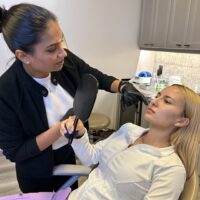
Under eye dark circles and bags have plagued people for a long time. Dark circles and bags can not only make you look tired, but can also age you. The appearance of these tend to have a pretty strong genetic predisposition; and also influenced by other factors such as smoking, diet, sleep habits etc. But those later ones are modifiable. Genetics – not so much. So, although you may be inclined to just “learn to love” them, there are a few options out there to help lessen the appearance of under eye dark circles and bags. Do your under-eye dark circles bother you? Are you ready for a PRP consult?