
When people hear the words cheek filler, they sometimes picture dramatically fuller cheeks or an obviously “done” look. But that isn’t what modern midface filler has to be about.
For many people, the goal is much simpler: restore lost structural support in the midface, bring back cheek definition, and create better balance across the whole face.
At SculptMe Aesthetics, midface filler in Glendale, AZ — including Restylane Lyft, Juvederm Voluma, and Radiesse — is used to rebuild the foundation of the face, not just add volume where it’s noticeably missing, but support the deeper structures that everything else rests on.
What Is Midface Filler?
Midface filler — often called cheek filler — is injected into specific areas of the cheeks and midface to restore volume, rebuild structural support, and improve facial contour.
The midface is often treated with a high-G-prime filler — one chosen specifically for its firmness and ability to hold shape under the skin. Restylane Lyft, Juvederm Voluma, and Radiesse are among the fillers commonly used in this area because of their lifting and projection capacity. They’re built to support superficial structures, not just fill space.
- Restylane Lyft is a hyaluronic acid (HA) filler formulated for lift and volume in the cheeks and midface.
- Juvederm Voluma is an HA filler specifically designed for cheek augmentation and midface volumizing.
- Radiesse is a calcium hydroxylapatite (CaHA) filler that adds volume and is also associated with stimulating some of the body’s own collagen production over time.
The important part isn’t simply how much filler is used, or which of these products is chosen — it’s where the filler is placed, and matching the right product to the support the area actually needs. Dr Davé can recommend the specific filler that best fits your anatomy and goals.
Why the Midface Comes First
The midface is the widest part of the face, and it forms the foundation of what’s often called the “triangle of youth” — a youthful face is widest at the cheeks and narrows toward the chin, while an aged face tends to widen toward the jawline as the midface loses volume and everything settles downward.
Because the midface provides structural support for the areas around it, it’s typically the area addressed first in a treatment plan, before more superficial concerns are treated. Restoring support here first — often with Restylane Lyft, Juvederm Voluma, or Radiesse — can make more superficial treatments more effective, since a well-supported foundation changes how the skin and soft tissue above it sit and age.
Why Do Cheeks Lose Volume?
- Less fullness in the cheeks
- Reduced cheekbone definition
- A flatter-looking midface Changes around the nasolabial folds/deep folds
- Hollowing or shadowing under the eyes
- A heavier appearance in the lower face
- An overall tired or less refreshed appearance
The Ripple Effect: Under Eyes and Nasolabial Folds
Because the midface supports the structures around it, restoring volume here doesn’t just change the cheeks — it can also soften the appearance of the under-eye area and the nasolabial folds (the lines that run from the nose to the corners of the mouth).
When the midface loses volume, the tissue above and below it loses some of its support too, which can make under-eye hollows and nasolabial folds look more pronounced. Rebuilding support in the midface first — with a product like Restylane Lyft, Juvederm Voluma, or Radiesse — can soften both, sometimes reducing the need for as much direct treatment in those specific areas.
Midface Filler Is About Definition and Support, Not Just Volume
One of the biggest misconceptions about midface filler is that more product automatically creates better results.
It doesn’t.
For a natural-looking result, the goal may be to add a relatively small amount of a supportive filler — such as Restylane Lyft, Juvederm Voluma, or Radiesse — in carefully selected areas. Strategic placement can enhance the cheekbones, restore projection, and improve facial proportions without making the cheeks appear overly full.
This is why an individualized approach matters. Your face has its own natural shape. The midface filler treatment — and the specific product — that works beautifully for one person may not be appropriate for another.
At SculptMe Aesthetics, the treatment plan should be built around your facial anatomy and your aesthetic goals, rather than following a one-size-fits-all formula.
Can Midface Filler Make the Face Look More Lifted?
Yes it can! It can create the appearance of a subtle lift, but midface filler is not a facelift.
When volume and support are strategically restored to the upper cheek, it can improve the transition between the cheek and lower face and create a more defined facial contour. The effect can make the face appear more refreshed and supported.
However, dermal filler does not tighten significantly loose skin or replace the results of facial surgery. During your consultation, your provider can help determine whether midface filler is appropriate for the concerns you want to address. One of the most common combination treatments are midface/cheek support with filler and then Sculptra/microneedling for skin texture, wrinkles, and biostimulation to produce collagen.
Who May Consider Midface Filler?
- Have noticed a loss of cheek or midface volume
- Want more defined cheekbones
- Feel your face has become flatter or wider near the jaw with age
- Have noticed more prominent nasolabial folds or under-eye hollows
- Want to restore facial balance and the “triangle of youth”
- Prefer a non-surgical treatment
- Want a subtle enhancement rather than a dramatic change
What Happens During Midface Filler Treatment?
Your appointment starts with a conversation about your expectations.
We will evaluate your facial proportions and midface structure before developing an individualized treatment plan, often prioritizing the midface first to build a supportive foundation, and selecting between Restylane Lyft, Juvederm Voluma, and Radiesse based on your anatomy and goals.
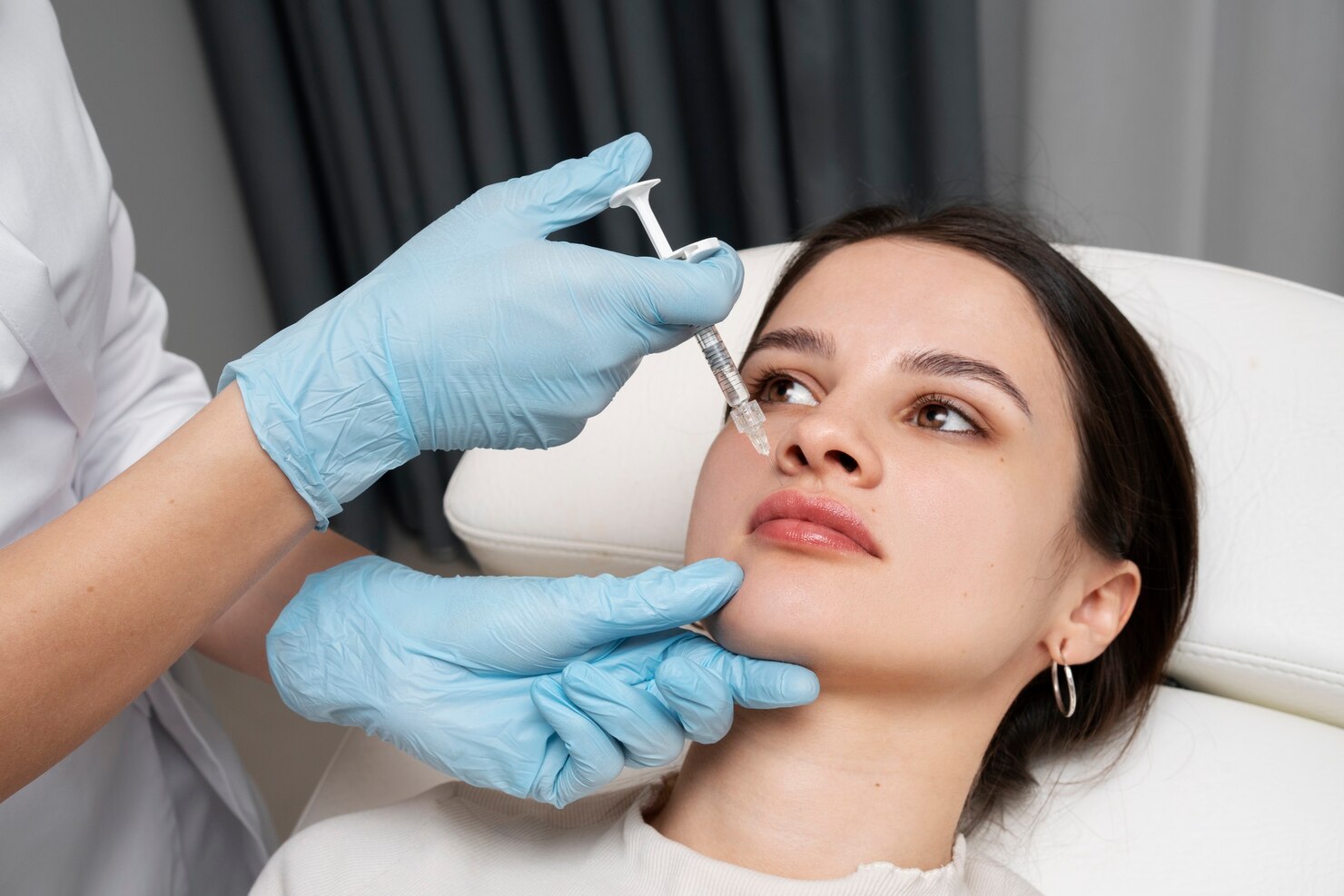
The treatment area is cleaned, and the filler is carefully placed in the selected areas of the cheeks. Depending on your anatomy and the technique required, a needle or cannula may be used.
You may experience some pressure, pinching, or temporary discomfort during the injections. The appointment itself is generally relatively short (about 45 minutes), although the exact treatment time varies from person to person.
What Is Recovery Like After Midface Filler?
One reason people choose dermal fillers is that there is generally little downtime compared with surgical facial procedures.
Immediately after treatment, you may experience some temporary:-
- Swelling
- Redness
- Tenderness
- Bruising
- Sensitivity around the injection sites
These effects typically improve as the area settles. You will be provided with aftercare instructions, including what activities or products to avoid immediately after treatment and when to contact Dr Davé if you have concerns.
How Long Does Midface Filler Last?
Midface fillers used to add structural support — like Restylane Lyft, Juvederm Voluma, and Radiesse — are often formulated to last longer than filler used in more superficial areas. Results commonly last approximately 12 to 18 months, and in some patients, up to two years.
Longevity still varies from person to person and by product. Factors such as the specific filler used, treatment area, amount injected, individual metabolism, and how your body responds to the product can all influence how long results remain noticeable.
Because dermal fillers aren’t permanent, maintenance treatments may eventually be recommended if you want to maintain your results. Dr Davé can discuss the expected longevity of the specific filler selected for your treatment.
Will Midface Filler Make Me Look Different?
That depends on the treatment plan and how much correction is needed.
For someone with significant volume loss, the change may be more noticeable. For someone seeking subtle contouring, the difference may be much more understated.
The goal of natural-looking midface filler isn’t necessarily for people to know you’ve had filler. Instead, you may simply look more refreshed, balanced, and supported.
Why Choose SculptMe Aesthetics for Midface Filler in Glendale?
Facial filler is not simply about injecting a product into the cheek.
Small differences in placement — and the choice between a filler like Restylane Lyft, Juvederm Voluma, or Radiesse — can influence the overall appearance of the face. That’s why an individualized approach is important when considering midface filler in Phoenix/Glendale, AZ.
At SculptMe Aesthetics, the focus is on understanding your goals and creating a treatment plan that works with your existing facial anatomy, often building support in the midface first before moving on to more superficial areas.
The aim is not to give everyone the same cheeks. It’s to restore the structural foundation of your face while maintaining natural facial proportions.
Frequently Asked Questions About Midface Filler
Does midface filler hurt?
You may experience some pressure, pinching, or brief discomfort during treatment. Most products contain lidocaine, which can help improve comfort during the procedure.
Why is the midface often treated first?
The midface is the widest part of the face and provides structural support for the areas around it, including the under-eyes and nasolabial folds. Restoring support here first, using a supportive filler like Restylane Lyft, Juvederm Voluma, or Radiesse, can create a stronger foundation for facial balance — and can make treatment of more superficial areas more effective.
Can midface filler help with under-eye hollows or nasolabial folds?
Restoring volume and support in the midface can soften the appearance of both, since these areas are structurally connected to the midface. It isn't a substitute for direct treatment of those areas if more correction is needed, but it's often the first step.
What's the difference between Restylane Lyft, Juvederm Voluma, and Radiesse?
can be used to restore midface volume and support, but they differ in composition and technique. Restylane Lyft and Juvederm Voluma are hyaluronic acid fillers, while Radiesse is a calcium hydroxylapatite filler. Your provider can help determine which is the best fit for your anatomy and goals.
How soon will I see midface filler results?
Some improvement may be visible immediately after treatment. However, swelling can temporarily affect the appearance of the cheeks, so your final result may become clearer as the treated area settles.
Can midface filler look natural?
Yes. Natural-looking results depend on factors such as appropriate product selection, placement, amount, facial anatomy, and the treatment approach.
How much midface filler will I need?
There is no universal amount. The amount needed depends on your facial structure, degree of volume loss, and desired result. Your provider can recommend an individualized treatment plan during your consultation.
Is midface filler permanent?
No. Restylane Lyft, Juvederm Voluma, and Radiesse are all temporary and gradually break down over time. Midface filler is often designed to last longer than filler in more superficial areas — commonly around 12 to 18 months, sometimes up to two years — but duration varies depending on the product and individual factors.
Support First, Definition Follows
Midface filler doesn’t have to mean dramatically fuller cheeks.
Sometimes, the goal is simply to restore the structural support that’s been lost over time — support that shapes not just the cheeks, but the under-eyes and nasolabial folds around them too.
When a supportive filler like Restylane Lyft, Juvederm Voluma, or Radiesse is thoughtfully placed in the midface, it can help rebuild the triangle of youth, enhance the cheekbones, and improve facial balance while keeping your appearance natural. It’s often the first, and most foundational, step in a facial aesthetics journey — and one worth the investment.
If you’re considering midface filler in Glendale, AZ, a consultation at SculptMe Aesthetics is a good place to start. Your provider can evaluate your facial structure, discuss your goals, and determine whether midface filler is the right place to begin.
Ready to explore your options? Contact SculptMe Aesthetics to schedule a consultation.